There and Back Again- One Man’s Story Far from Home

(Before) Just about to leave
Michael White and fiancé Sarah Simmons. Image taken before White went to California for training.

They say ‘college isn’t for everyone’ but they’ll pressure you to go anyways. This was true for Michael White who was an average 18 year old freshman unsure about whether college was for him. He attended Johnson State in Vermont for a few years, getting into the “no good partying things” as his now fiancé Sarah Simmons put it.

Deciding college really wasn’t for him, White dropped out. After about half a year at home, he began expressing interest in the Marine Corps. No one could talk him into thinking about another branch, and so he enlisted.

“I felt pressure from everybody to go to college…there was a stigma to go into the military…that’s what it felt like for me personally…I went to college and just decided that I didn’t want to be there right now, so I enlisted in the Marine Corps.” White said on his decision to enlist.

White spent some time in the POOLE program, which met once a week to prepare the recruits for basic training. On the 12 of October in 2010, he went to Parris Island in South Carolina for three months of bootcamp. It was a whirlwind of training after that.

White was home for a month, then infantry school in North Carolina for two months, home again for four weeks, then left for California to train in the Mohave desert for four months to train for Afghanistan. After all that training and a unit assignment White arrived in Afghanistan in early May of 2011.

“The doors to the plane open down, and it feels like you’re walking on the moon. The dust is so dry and so fine….it felt like another planet almost…” White said about his arrival to Afghanistan.

Del'aram
Delaram, Afghanistan.

During his six and a half months in Delaram, White and his unit served as security for their area of operation there. Their main objective was to stop the terrorist cells that were in operation in the area.

“What they would do is they would get these vehicles and they would load them up with bombs and they would set them off in the market place in the city…” White said about one of the things the terrorists would do.

They were there to protect the civilians, White says, but the civilians protected the Marines as well. At night, when the terrorists set out the IEDs, the civilians would remember where they were and tell the Marines. White and his unit would then avoid them entirely or blow them up safely.

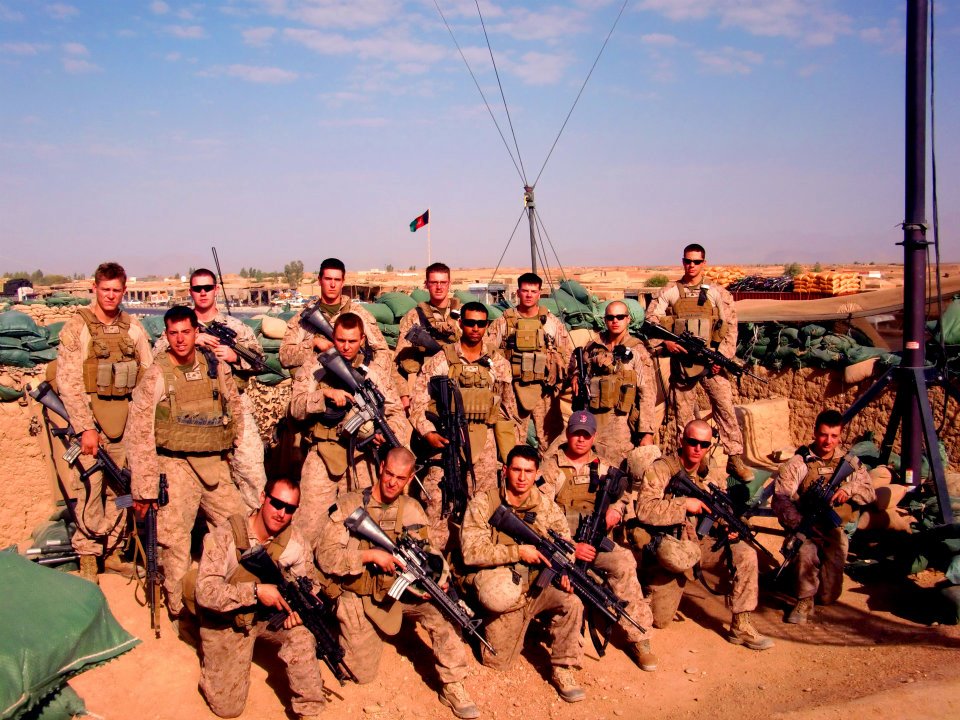
Picture of my squad
White and his squad in Afghanistan.

For Sarah, being apart was hard. Communication was weird and spotty at best. While White was in bootcamp, she wrote him two letters a day.

It was different when he went to Afghanistan. White would go into the city for a month, and during that time they would have no communication. Sarah sent him two care packages a month, and letters via MotoMail, a service that emailed letters to the base where they were printed off and distributed to the Marines.

Sarah’s mother, Deb Simmons, supported her daughter throughout the six and a half months White was away. She too, worried about what he was doing. Being such a low rank, White was the one out looking for mines and pushing in the doors when they would clear rooms.

Sarah finished out her junior year of college waiting for the boy she met at Sargent Camp in 5th grade to come home.

When White finally came home, Deb was surprised by how much he talked about what had happened.

“I think he needed to” she said. Both Deb and Sarah agreed that White grew up a lot while he was away. He saw things he never thought he would, and that stayed with him even after he was home.

It was an adjustment for everyone. White described it as “culture shock” going from the extreme of Afghanistan to the suburban life. He did miss the pine-y smell of New England. In the time he was away, he had forgotten what real plants smelt like.

Sarah didn’t believe he was home at first. In the past year they had only seen each other for short periods of time between trainings, so it took some time for the reality to sink in.

(After) Marine corps Ball
White and Sarah after the Marine Corps Ball.


During White’s first week back, he and Sarah went to Boston to celebrate their anniversary. In the restaurant, White didn’t want to sit with his back to the restaurant. Sarah didn’t question this, and was later surprised by his behavior while walking down the street.

White would duck and look around the crowd as if something bad would happen. He described himself as feeling uncomfortable, like he wasn’t supposed to be home. It was a bigger adjustment back into normality than anyone expected, including White himself.

Now, White is in school to become a nurse, a decision he says was prompted by his time in Afghanistan.

“When vehicle bombs or IEDs would go off and there were civilian casualties, which most of the time there were, we would be the first responders on the situation. So there were a lot of times where there were a lot of people who needed immediate attention but I couldn’t do a single thing cause I had to cover my sectors. The Taliban would set off a bomb and then they would ambush us when we responded to help people.”

After talking with Sarah about it, he went back to school. Sarah agrees that it is a good fit for him, because the fast pace of it, which is something he responds well to. White knew that he wanted to help people in a way he was unable to in Afghanistan.

Published
Categorized as Journalism

Snow Finally Comes to New England

Taken from NECN.com

The first snow fall always makes even the most seasoned New England drivers cautious. Weather predictions for November 14 detailed several inches across the state of Massachusetts with less towards the coast. 

Cold rain started in the late evening, and changed to a mix of snow in the early morning hours. In Boston, the mix was mostly rain, and the coast can be thanked for that. As such, there was little commotion added to the morning commute within Boston.

Students at Emmanuel College were not affected by the snow, or lack there of. Junior Maura Tuohy was excited to post a picture of the snowy quad on Instagram because of the tweets she saw on Twitter. Even with a lack of snow, Tuohy’s flight to Raleigh North Carolina was delayed by and hour.

Senior Christine Abram was more concerned about the cold than the lack of snow. “I walked from Julie [Hall] to here [the library] and it was very cold. I looked outside and expected it to be like yesterday, and it was warm yesterday…” she said.

For those coming into Boston from suburbs, the commute was filled with spits of snow. Anne Hancock, a librarian at the Cardinal Cushings Library at Emmanuel College said her commute was slowed slightly because of the snow since people were driving slower. Hancock said however that it did not take her much longer than usual to get to work; her commute was still around 40 minutes.

In Boston there was .29 inches of  precipitation that fell on Friday, making this first snow fall more of a snow flop.

Published
Categorized as Journalism

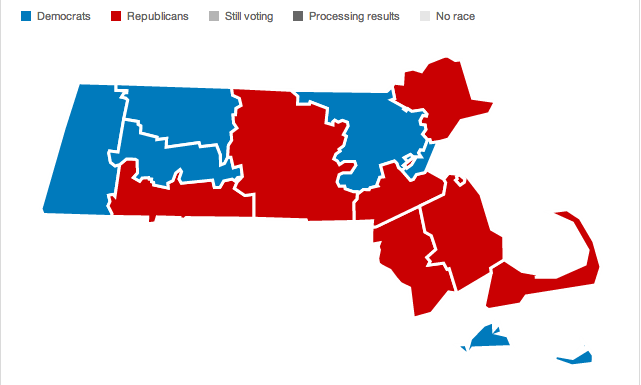
2014 Massachusetts Midterm Election

Martha Coakley (D) and Charlie Baker (R) are the top two candidates for the Gubernatorial election. There is a third party candidate, Evan Falchuk (I), who is gaining favor within his subgroup.

Coakley is currently the Massachusetts Attorney General and has been since 2006. She was the first woman elected to this position. Baker is the former CEO of Harvard Pilgrim and also served as Administration & Finance as well as Health & Human Services cabinet positions under Weld & Cellucci. Falchuk is spearheading the United Independent Party, which faces validation in this election.

Screen Shot 2014-11-05 at 12.43.26 AM

In the first hour, Baker lead straight out of the gate with 50%, Coakley followed closely with 47%, and gained a solid Falchuk 3%.

In the second hour, Baker dropped to 47.4%, Coakley rose to 47.8%, and Falchuk rose to 3.3%.

In the third hour, Baker rose again to 48%, Coakley dropped slightly to 47%, and Falchuk maintained 3.3%.

With 2.3% of the precincts left to report in, Coakley refuses to concede until all the votes have been counted. As it stands at near 1:00am Baker leads with 48.3%, Coakley has 46.7%, and Falchuk holds steady with 3.3%. Since Falchuk was able to maintain a percentage above 3%, the United Independent Party will be able to hold primaries and be recognized as a legitimate party.

UPDATED: As of 1:19am, Baker is officially the Governor of Massachusetts winning with 48.4%. Coakley comes in with 46.6%. No official word on her conceding yet.

Maura Healey (D) and John B. Miller (R) attorney general candidates. Healey served as deputy attorney general under Coakley and played a notable role in Massachusetts’ efforts to abolish the Defense of Marriage Act. Miller has degrees from MIT in Civil Engineering and Soil Mechanics. He has been in private practice dealing with construction and government contracts law.

Maura Healey wins the Attorney General slot. She becomes the first lesbian elected into a state office.

Question 1 was on the gas tax. It was passed with 52.6% for and 47.4% against. This repeals the 2013 law that increases gas tax with inflation.

Question 2 presented a new bottle bill. This would expand the state’s beverage container recycling law to include all non-alcoholic containers. It was rejected, and so recycling laws and procedures will remain the same.

Question 4 dictated the Casino Law Repeal. Should the law pass, it would repeal the 2011 law allowing three casinos and a slots parlor to be built. This was rejected, and construction will continue on schedule. Gambling laws will remain unchanged.

Question 4 upon being passed, requires employers to provide paid sick leave for employees. For every 30 hours employees work, they will earn 1 hour of paid sick leave. Employees can earn up to 40 hours of paid sick leave a year. This will affect companies with 11 or more employees.

Published
Categorized as Journalism

5 Questions

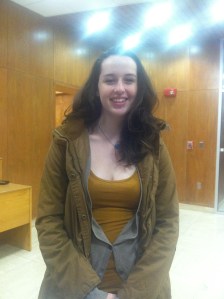
IMG_0992

What’s your name?

Emily Milliken

What are you doing in the library?

Homework…and a study session.

Did you have a good Halloween?

Yes, I did have a good Halloween. I was a jellyfish!

What are you most afraid of?

Body mutilation. Like if I got in a car accident and got hurt but didn’t die. Getting paralyzed or realizing you don’t have legs anymore.

If someone asked you to give them a random piece of advice, what would you say?

Don’t take college algebra…haha. No seriously, um, don’t regret stuff. Cause it all ends up being funny in the end. 

Published
Categorized as Journalism

The Ghosts of Marshalls Corner School

IMG_6984-1

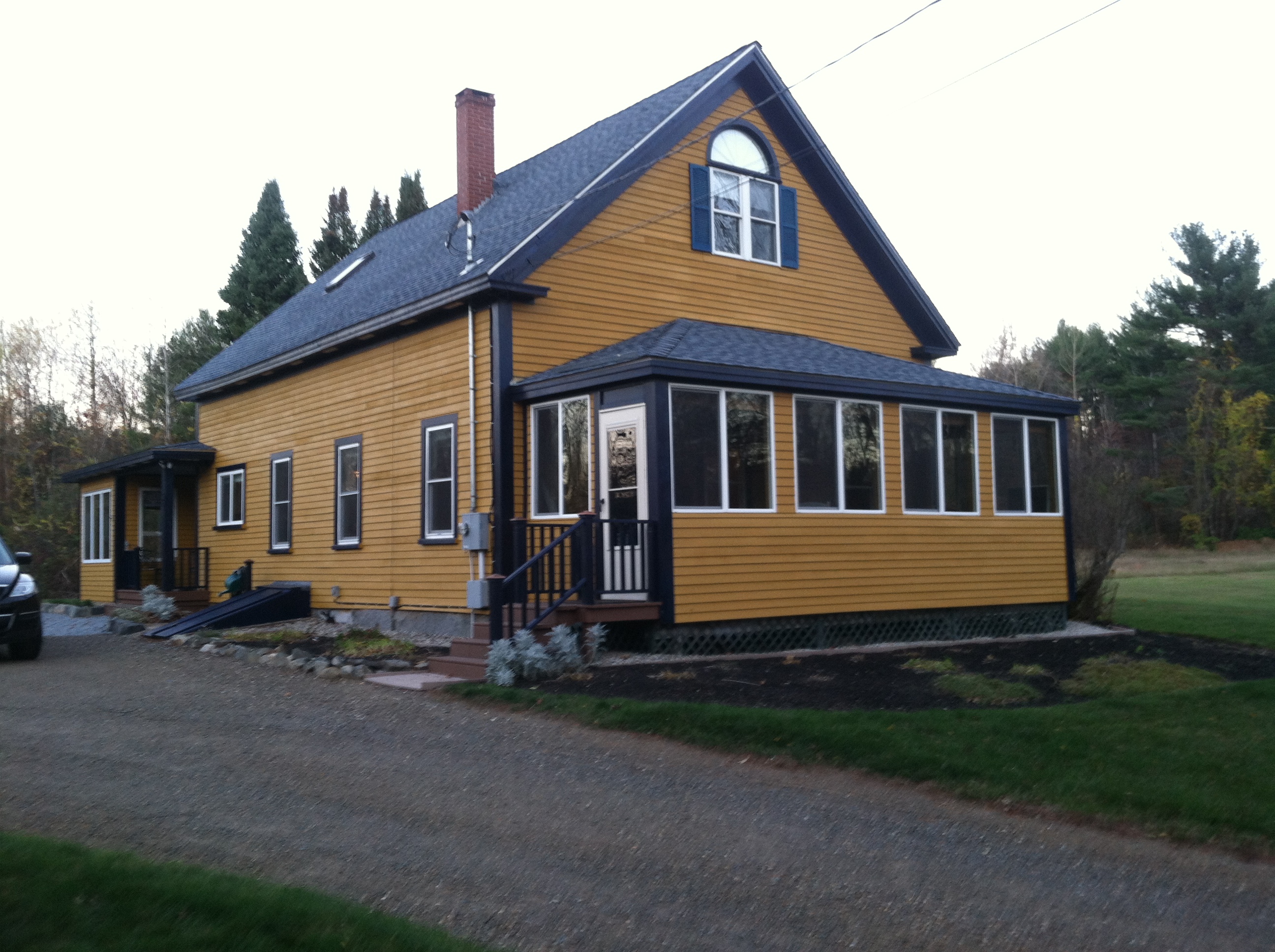
I live in a haunted old school house. It was built in 1875 as a one room school house, and since then has been updated into a four bedroom single-family home. It is rumored that a young boy died on Pickpocket Road on his way to school. This may be the reason for the hauntings at my house, but it could also be the lingering spirits of children who refused to grow up.

When my parents first moved in, they heard children’s laughter both upstairs and and in the basement. They were both home alone when it happened, and didn’t mention it to one another. How do you casually bring up in conversation that you heard children laughing? Okay so this part is a little creepy.

When my younger brother was around 4 or 5, he moved upstairs with me. Before then, he lived in one of the rooms downstairs, which was being turned back into my mum’s sewing room upon his departure. While we were upstairs, there was a loud bang. It turns out, a large basket full of stuff had fallen, or been pushed, off the shelf and tipped upside down.

A few years ago, when my dad was home alone and working in the basement, he heard footsteps walking around the house upstairs. He went upstairs to investigate, and found no one.

One night last year, my mum was in the kitchen getting coffee ready for the next day. She heard a noise behind her, and turned around to see one of the kitchen table chairs rocking back and forth.

The only encounters I’ve had involved caps flying off of containers and bottles and ending up across the room. People have tried to justify this to me with science, but science can’t explain everything.

Published
Categorized as Journalism

The Challenge of Housing in College

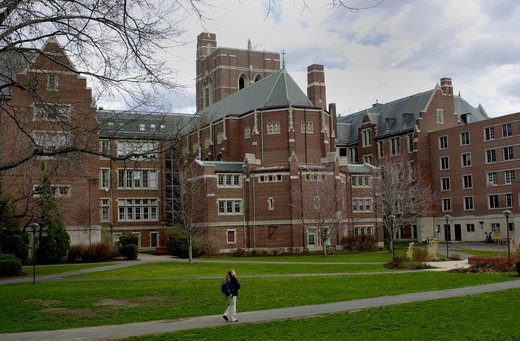
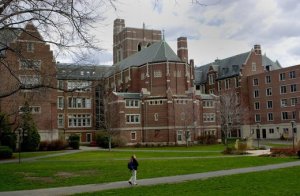
Campus of Emmanuel College

For many college students and recent graduates, the search for good housing–with adequate property management, convenience to workplaces and classes, and a reasonable monthly rent–can feel futile. As Boston Globe’s May Spotlight Team investigation “Shadow Campus” revealed, even students who find housing are not always safe in their homes despite the costs of living in them.

These extra added costs of living off campus start to add up after a while, leaving students digging for change in their pockets to buy dinner. The financial aspect of living off campus isn’t the only issue; the security of an apartment building is very different from a dorm. At Emmanuel, there is always someone sitting at the front desk checking IDs to make sure that only students can enter the buildings. At night, a police officer mans the desk to help students sleep soundly in their dorms. Boston is a dangerous city and it’s easy to forget that when most of your time is spent inside the iron gates of Emmanuel.

“I feel relatively safe where I live off campus. Because of the recent incidents at Clemente I have been little skeptical of walking back home very late at night, but I have never felt unsafe or in danger at any point in my walks home,” says Sophomore Shanna Figlewski  who lives in a two bedroom apartment on Park Drive near Clemente Field.

In the past month, Emmanuel College students have been notified of two armed robberies involving students. In the first, on Oct. 3, five students, four from Emmanuel, were robbed by a group wielding a handgun and tasers at Roberto Clemente Field, just off campus. On Oct. 19, an Emmanuel student and a student from another Boston College were robbed at gunpoint while traveling through the McLaughlin Playground on Parker Hill Ave. in Mission Hill.

The college implemented increased security measures at the start of the fall semester, requiring all students and faculty to wear their ID at all times while on campus. The measure has not proven popular with students, with few wearing their IDs.

Many students elect to stay on campus rather than hunting for apartments. At many colleges, students are guaranteed housing, and others find themselves at satellite locations or in independent housing arrangements when colleges are not able to accommodate growing student bodies. Emmanuel College’s recently published Institutional Master Plan includes 500 new beds in dorm rooms. This will ideally allow the College to be able to accommodate 76 percent of the student population, assumed to be about 2,200 students within the next 10 years.

On-campus Housing

Many students who live in dorms have mixed feelings: a positive sense of safety, and a sense of restricted independence. Sarah Riordan, 22, would prefer more independence than dorm living allows. “It would be nice to have my own space,” Riordan said. But like many of her classmates, she could not pass up the ease and simplicity of dorm living. Abby Townson, an Emmanuel senior, echoed these sentiments, saying that the independence of apartment living is growing more appealing.

“I feel safe,” says junior, Michele Levada. This is her third year living in a resident hall. Being in one of the dorms on campus means that she has 24/7 access to the school’s campus safety. These officers are on call at all time for the students and they aid in issues of concern.

“They respond to fire alarms going off,” says Levada when she referenced her next door neighbor being woken up at 6 in the morning because a campus safety officer was knocking on the door. Her alarm had been going off- blinking- and campus safety responded immediately.

Stefany Gutierrez, a sophomore, said this about living in a triple room on campus her freshman year, ” …there was never any room to do anything. My desk was under my bed which was lofted and I had no access to it. My clothes were always all over the place because there wasn’t enough storage space, our room was always a mess.” Gutierrez said that while living quarters were cramped safety was never an issue, “I always felt safe on campus with all the security even though it was overwhelming at times. Once I was chased into my room by an RD for not flashing my ID to the desk attendant.”

“We have security guards and our campus is in a relatively safe area,” Sean Speckin, a junior, says. “Also having IDs [the Emmanuel students must present an Emmanuel College ID to the front desk security guards in the lobbies of the dorms] to get into building and rooms makes it pretty secure.”

Speckin isn’t the only one who feels this way. Freshman Colleen Dauwer says “I don’t [have any safety concerns] because I see security everywhere, and there’s always someone at the front desk going into Loretto [a freshman dormitory], and including a guard after midnight. I can’t even break into my own dorm and I live there.”

Emily Baker, also a sophomore at Emmanuel who lives on campus says she finds security to be “…too aggressive and overprotective to be honest. I feel safe but the bag checks and the ID policy is a little aggressive.”

Baker also noted the issue of cleanliness in the dormitories.

“I had a mouse in my room and I didn’t even know it until one day I was eating a bag of chips and they were pouring out onto my lap and I noticed claw and scratch marks into the bag and it completely grossed me out,” she said.

Claudia Ouellette, an Emmanuel College sophomore, lives in St. Joe’s residence Hall. She says,“Living on campus is convenient, but not ideal. It can be pretty gross. The mice problem is disgusting.”

Mice have also been an issue in several of the kitchens, that are on every floor of most buildings, across campus with reports from several students.

Sarah Salerno, a sophomore, spoke on her freshman year living in the dorms. She lived next to the RA and was always called out for being ‘too loud’. This year, she says, the bathroom has been the biggest issue. In the first month someone pooped in a shower on her floor and the soap dispensers were contaminated.

The dorms aren’t ideal living spaces, but being so close to campus is a luxury.

“You cant wake up two minutes before a class and still make it from Joes to the Library on time,” says sophomore Robert R. Crowley about living off campus.

Satellite Campuses

Stephanie Jarvis ’16, lives in a satellite location CityView. This location is on St. Alphonsus Street, an approximate 15 minute walk from the college. She  feels safe and when asked about potential fires and risks she says, “there are fire detectors” and that there are “locks on all the doors.. deadbolts.” It is reassuring to the students to know that they have this type of protection and access to it.

Jarvis refers to the “knobby” when talking about a mechanism developed for residents to get into their building. They have to tap it on a keypad to get in order to get into the building. If not, you have to knock on the door and talk to someone to get in.

Jarvis finds herself in a decent sized apartment- two people per room (two bedrooms), two bathrooms (1.5 baths), one living room, and one kitchen. However, she says that the apartment was not clean when they moved in and no one took that time to make sure that it was.

Emmanuel does not handle all the facilities at these apartments in CityView and Jarvis says that they have to call plumbers and the front office for issues that arise.

“One time they had to call the cable guy for us- he didn’t do anything.” Jarvis says this when referencing all the loose wires and cables that were in her apartment- posing a hazardous threat and potential fire hazard.

Jess daSilva, a junior, lives at City View. Upon moving into her apartment, daSilva was welcomed with holes in the walls and a broken dishwasher. Since moving in, daSilva and her three roommates have been faced with bedbugs as well as a mouse. It has taken two weeks to deal with the bedbugs issue, leaving the girls living out of trash bags.

Gina Stoyle, a sophomore at Emmanuel, lives off Campus in a Wheelock College dorm. Stoyle said the building as a whole is “filthy,” and would “most likely fail any type of safety inspection.”

“Even though the dorms at Emmanuel are kept in better condition I feel safer here (Wheelock) because there is security guard 24/7 and at Emmanuel there is only a guard from 12am-8am” said Stoyle.

Off-campus

There are more than 136,000 students attending college in the Boston area, with 36,500 living off campus, frequently in overcrowded conditions. While apartments turn over every year, the city does not always inspect them, leading to bug and rodent infestations and safety problems.

The series “Shadow Campus” went into detail about multiple tragedies that happened in Boston at student apartments and houses. Overcrowding and unsanitary conditions were mentioned in the articles.

So why live off campus?

Money is a big component. Sometimes living off campus can be significantly cheaper than room and board on campus. Generally an apartment off campus can run for a few thousand dollars a month, which when split between four or more people is doable. Comparatively, housing on campus is $13,580 per person for a year.

“I like change,” says Emma Barker who is a sophomore at Emmanuel College. After two years of living on Emmanuel’s campus, she hopes to venture out next year to find her own apartment with some friends.

Chris Curtis, a junior at Emmanuel College, lives in an off campus house in Allston with 8 other males.

“There are no fire escapes, the doors are not dead bolted, and the house is not kept up to a good standard regarding health and cleanliness,” says Curtis.

When asked if the landlord would take care of any of these pressing safety issues, Curtis replied with, “doubtful.”

Curtis and his roommates moved off campus to have more freedom so they were no longer under the schools jurisdiction.

Sophomore Shanna Figlewski recently made the switch from Saint Ann’s hall to a two bedroom apartment on Park Drive near Clemente Field.

“I definitely have more independence from living off campus,” says Figlewski about her apartment. “I don’t have a meal plan so in order to eat I have to buy my own meal and prepare my own food, which i every different from just picking up a burger from the dining hall. I also have to pay an electric and cable bill which I have never done before.”

Mike Rainha, a junior at Emmanuel College, lived on campus for his first two years but moved into a house in Allston on Highgate Street this past September. He prefers living off campus as opposed to living in a dorm and said, “I enjoy having the freedom of my own house, all the guys take turns doing dishes and cleaning up so it worked out really well.”

Mike lives in a house with seven other guys, although there is only supposed to be six of them total. Two guys’ names are not listed on the lease for this reason. Mike explained that having more people living in the house made it more affordable.

One thing Mike really liked about his location in Allston is that they can either take the T, walk 20 minutes, drive their cars, or take their mopeds to and from campus. He appreciates having a driveway at his house so they have a safe place to keep their cars and mopeds.

Sarah Colby and Cara Callahan, Emmanuel College Class of 2015, are proud apartment renters in Allston. They moved off campus after their sophomore year, spending their junior year living in City View.

They rent a two bedroom apartment in Allston, and are very happy with how things have been turning out. Aside from a slight mice problem, which their landlord handled right away, they do not have many complaints about their living situation.

Sarah and Cara can either take a bus to their apartment, or they can take a 30 minute walk. They explained that they try to stick together for safety purposes.

Emily Shea, 22, chose her current apartment in the South End for its convenience. It is close to two major MBTA stops, so she is easily able to commute to work. A recent Emmanuel College graduate, Shea previously lived in a Mission Hill apartment. There, her property management company did not address maintenance concerns, and the tenants’ problems went unresolved. She notices a drastic change in her current apartment, where concerns are addressed quickly and efficiently.

Kristen Plummer, an Emmanuel senior, has also had positive experiences with her apartment’s property management. Her apartment in the Kenmore neighborhood is managed by Haus of Realty.

Plummer said that her Haus of Realty manager will “come right away, no matter what [the issue] is. It makes such a difference.” When one of the outer doors of her apartment building would not lock, her property manager came and fixed the problem immediately.

Carlie Capell and Kelley Turner, both of the class of 2016, live on Park Drive. These apartments are around a 10 minute walk from campus, providing they don’t get stuck at the intersections along the way. Upon moving in, both Capell and Turner were faced with the leftover grime of previous tenants.

Turner experienced mold in her bathroom along with several unknown substances, there was food still in the fridge, a sticky coating on the kitchen floor, and the walls were covered in dust. Capell experienced something similar. Thirteen people lived in their five bedroom apartment before them and left the apartment a mess. However, while Turner, her roommates, and their mothers were left to clean their apartment for six hours, Capell’s landlord called in a cleaning service.

As a graduate who found an apartment in the Fenway neighborhood, Nikki Haggan admits that while apartment living has its benefits, she misses dorm life for its convenience. As she tries to address maintenance concerns in her new building, she looks back upon the days of Emmanuel-managed housing with some sense of nostalgia. Colleges that have enough space to house all their students may be the best property managers, as generally they have an on-campus maintenance staff.

Students around Boston have expressed different levels of anxiety when it comes to the security of their living situations. “I’m on the first floor so there’s some worry that someone could break in through a window,” says Taylor Lovett, a Boston University junior who lives in an apartment on Park Drive.

It’s not just apartments that can be worrisome- students in dorms even have their share of scares. Madeline Lies, an Emerson College sophomore says that she is “a little concerned about the safety in my dorm. My room doesn’t lock and when it does, we get locked out. That’s slightly concerning. Also, Emerson implemented an ID tap system outside of every building, as every building now locks at 11:00pm. This can be really scary. The machine doesn’t always scan,” she says.

Lies’s recalls how “three weeks ago, I was coming home from a party and three men followed me, catcalling me to my dorm. I couldn’t get in for a good minute. Stuff like that’s scary.”

Chris Warren, a sophomore at Tufts University expresses concern, saying how he “sometimes [does have safety concerns] because people are always letting others who knock into our building…you don’t know why those people might be going into the building and that is kind of scary.”

This story was written and reported by Introduction to Journalism students Sarah Berggren, Samantha Bissell, Olivia Cavalieri, Caitlyn Clausen, Sophie Fish, Danielle Jamieson, Olivia Larson, Abigail Matheson, Kayla Mazzarini and Anna Topping.


Published
Categorized as Journalism

The Real Costs of Living Off Campus

Campus of Emmanuel College

In choosing to live off campus, students take on the reality that their housing is no longer guaranteed to be clean and safe.

This reality is filled with mold ridden showers, holes in walls, and infestations of various vermin and bugs. Students at Emmanuel face such issues when they move into both apartments and satellite housing provided by the college.

Carlie Capell and Kelley Turner, both of the class of 2016, live on Park Drive. These apartments are around a 10 minute walk from campus, providing they don’t get stuck at the intersections along the way. Upon moving in, both Capell and Turner were faced with the leftover grime of previous tenants.

Turner experienced mold in her bathroom along with several unknown substances, there was food still in the fridge, a sticky coating on the kitchen floor, and walls covered in dust. Capell experienced something similar. Thirteen people lived in their five bedroom apartment before them and left the apartment a mess. However, while Turner, her roommates and their mothers were left to clean their apartment for six hours, Capell’s landlord called in a cleaning service.

Jess daSilva ’16 lives at City View, a satellite campus put on by Emmanuel College. Upon moving into her apartment, daSilva was welcomed with holes in the walls and a broken dishwasher. Since moving in, daSilva and her three roommates have been faced with bedbugs as well as a mouse. It has taken two weeks to deal with the bedbugs issue, leaving the girls living out of trash bags.

On the Emmanuel campus, the dorms are cleaner. Sarah Salerno ’17 spoke on her experiences on living in the dorms. Her freshman year, she lived next to the RA and was always called out for being ‘too loud’. This year, the bathroom has been the biggest issue for Salerno. In the first month someone pooped in a shower on her floor and the soap dispensers were contaminated she said.

Regardless of where students live, they face the issue of cleanliness. Students all felt some degree of safety wherever they lived.

Published
Categorized as Journalism

Lara Bricker

233410a

Sometimes, the journey you end up taking isn’t the one you thought you would. For Lara Bricker, journalism was a backup plan, an addendum to her study of horses at the University of New Hampshire. Bricker was offered an internship at the Exeter Newsletter while still in school. This experience changed her views on journalism and after graduating from UNH in 1998, Bricker was offered a job at the Exeter Newsletter.

The Exeter Newsletter asked Bricker to write everything from human interest pieces to crime reports. She was a crime reporter until she was offered a job as an assignment editor in 2002 for three weekly publications, the Exeter Newsletter, Hampton Union, and Rockingham News.

Bricker wrote freelance throughout her entire journalism career for the Portsmouth Herald, the Union Leader, and most notably for the Boston Globe during the Dartmouth College murder of 2001.

Keeping her interest in crime writing, Bricker published a true crime novel, Lie After Lie: The True Story of a Master of Deception, Betrayal and Murder in 2010. This book follows the true story of James Keown, a radio talk show host from Waltham, Massachusetts convicted of murdering his wife with antifreeze.

Working for a small town paper was what Bricker liked most. It allowed her to get to know the community more and become more involved.

“Small town communities need watch dogs.” Bricker said. “That’s a really important role to be a watch dog in these little towns where things might be going on and you’re the one who is able to bring that to light”.

On the flip side, Bricker said her least favorite thing was night meetings. As a new reporter, she got stuck in late night board meetings that were very boring.

Bricker offered some advice for up and coming journalists. She says that you have to be flexible and willing to change with the times. When she began at the Exeter Newsletter, there was one computer. Now, reporters are tweeting live from the scene. In order to keep up with this changing industry, future journalists need to be up to date on all of these advances, which may include taking your own photos or videos where as before, there was a photographer for that.

Bricker currently writes a twice a month column for the Exeter Newsletter chronicling the people, places, and events in the town of Exeter, New Hampshire.

Published
Categorized as Journalism

Students Give Mixed Reactions to New ID Policy

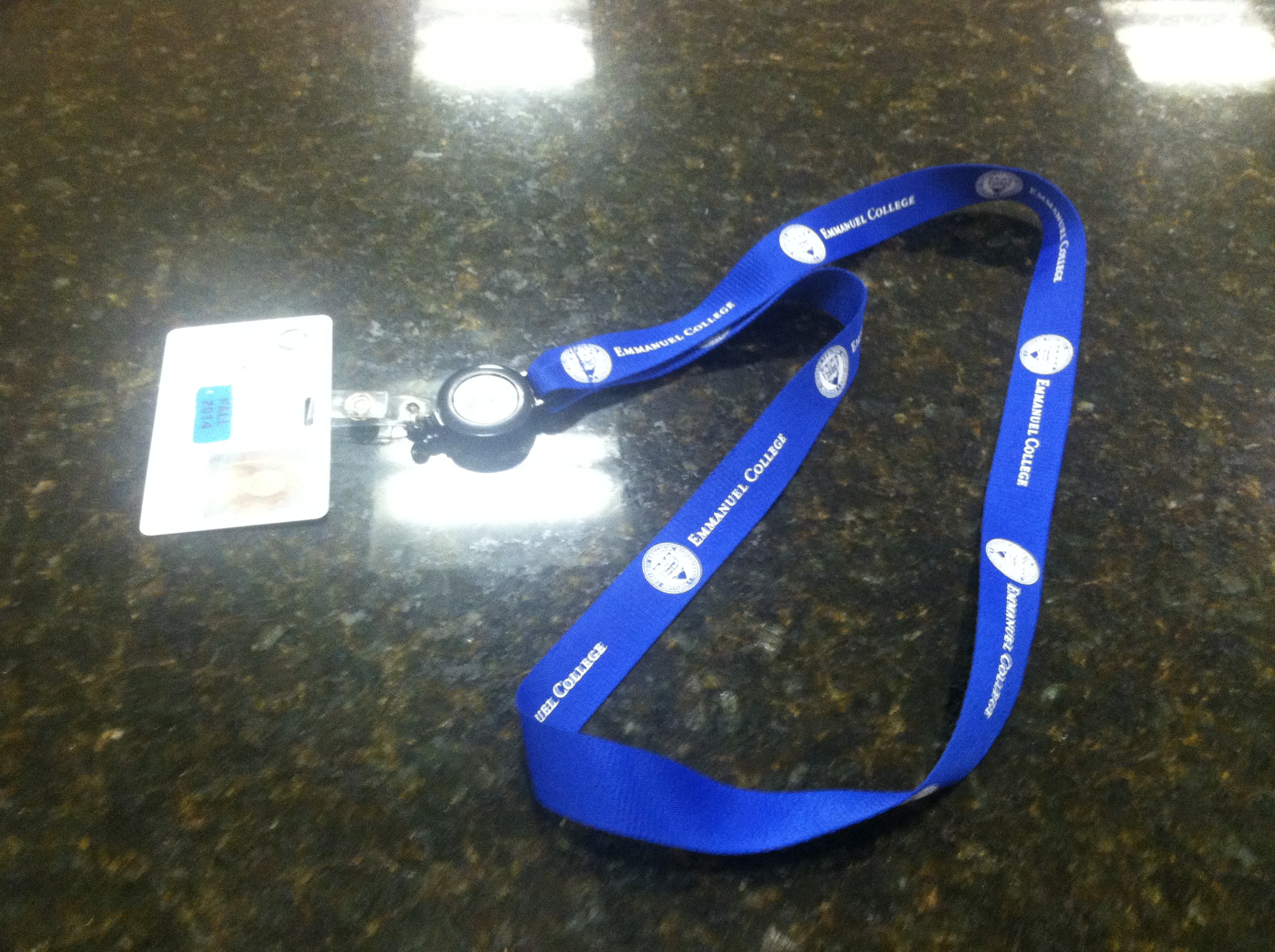
photo (1)

As of the 2014 school year, a new ID Policy has been created for Emmanuel College. In the 2014-15 Student Handbook, the policy states that “…all employees and students must obtain and wear an Emmanuel College ID…” and that “the College ID should be conspicuously displayed to allow for ease of recognition by the campus community”. This policy also states that the ID must be worn either “on a lanyard around the neck” or “clipped, magnetized, or pinned to the upper left or right breast pocket area of a shirt or jacket or attached to a belt”.

When questioned, students expressed mixed feelings about the policy. Maura Tuohy, a junior, believes that it is a very small inconvenience that will only benefit the larger safety of the college. Tuohy, a Library Student Worker, states that the policy would help identify patrons in the library who are not Emmanuel students, thus ensuring the safety of those in the library.

Others, like sophomore Tommy Dion and junior Justine McLaughlin, feel that the policy is unrealistic and an inconvenience. McLaughlin said “no one’s going to get dressed and clip on their ID every morning” which seems to be the case when one observes students walking through campus. Few students follow this new policy, and it is not being heavily enforced.

According to John Kelly, the head of security on campus, no one is going to be overly demanding about the policy, as it is no new. However according the the handbook, “employees have the right to question anyone who is not wearing an ID and
may also contact Campus Safety” in regards to students not wearing IDs.

Students wonder when the level of enforcement will match that written in the policy.

Published
Categorized as Journalism

It’s Never Too Late To Go Home

BxvES2xIgAEteBa

It took Steve Balestrieri 30 years to get a job in his home town. Having already traveled to 43 different countries working for special forces and Hollywood movies, Balestrieri came home to do something most people do in high school. He returned to Millbury, a small town in the middle of Massachusetts where he grew up. It was here that Balestrieri met Jennifer Paluzzi, a then editor for The Millbury Daily Voice. Paluzzi reflects on her first meeting with Balestrieri for the 8am Introduction to Journalism class on Wednesday, September 17th. She told the class that, while Balestrieri had no journalism experience, his resume was too interesting to turn down.

“Millburry is pretty small…they don’t trust out-of-towners,” Balestrieri said. As a result, Balestrieri had to work hard to gain their trust. To do this, he ditched his car and spent most of his day walking around town getting to know the locals. Half of his stories came about this way, he said, including one where a man constructed the Stanley Cup entirely out of Lego. Balestrieri says he knows 3/4 of the town’s residents, including a ghost who lives in the town’s museum.

Now, Balestrieri writes for PatsFans.com where he is a featured columnist. His first love is football, he said and thoroughly enjoys covering the Patriots every Sunday.

Published
Categorized as Journalism